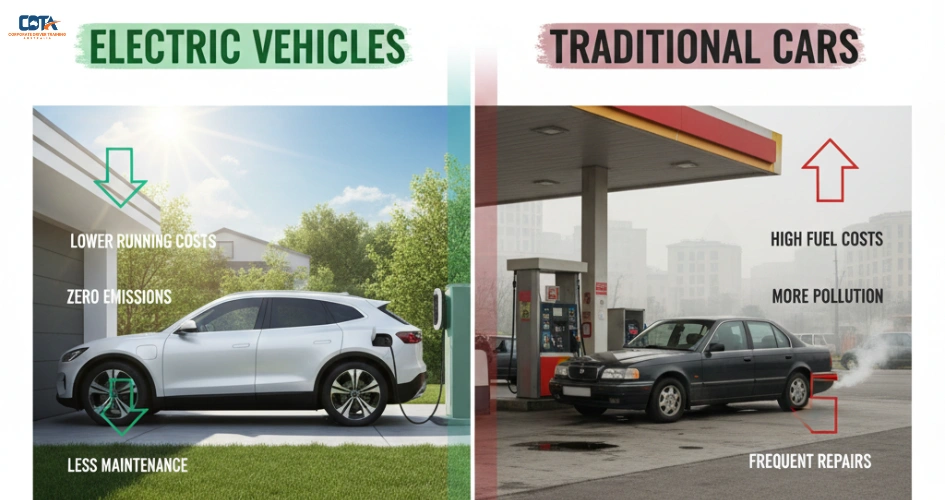
Drivers across Australia are gradually shifting towards Electric vehicles (EVs), the greener, cleaner alternatives to traditional cars. The rising popularity of electric vehicles is also due to their constant technical upgrades, powerful features, and reduced costs. In the corporate world, too, EVs have quickly moved from being a niche trend to a serious business advantage. Today, companies are rethinking how to manage their fleets among rising fuel costs, sustainability expectations, and performance pressure. At such times, EVs come across as a practical, financially smart, and future-focused choice. From driver safety and reduced accident risks to better use of technology, electric vehicles offer many advantages when compared to traditional cars. And when paired with professional corporate driver training, these vehicles can offer even more benefits. Let us discuss the importance and key benefits of electric vehicles compared to traditional cars.
Why Electric Vehicles Are Important for Corporate Fleets
The Australian government is aiming for net-zero emissions by 2050, and creating a cleaner, more sustainable transport system is key to achieving this goal. EVs are at the centre of this shift, with more businesses now opting for environmentally friendly fleet options.
EV sales have reached new highs in Australia, making up nearly 10% of the car market. A significant portion of this growth comes from fleets, as businesses realise that using EVs for fleets is about sustainability, smart financial decisions, and long-term operational stability. They help businesses to reduce fuel expenses, improve ESG reporting, modernise fleet operations, improve road safety, and enhance their brand’s reputation.
Key Advantages of Electric Vehicles Compared to Traditional Cars
1. Big Savings on Operating Costs
The most significant benefit of Electric Vehicles is the reduction in expenses. Traditional cars use a lot of fuel, and fuel prices also keep fluctuating, affecting the business’s monthly fleet budgets. Electric vehicles remove this problem instantly, as powering Electric Vehicles is much cheaper than fueling traditional cars. Over a year, this can add up to a considerable amount in savings. Businesses can also stabilise their energy costs by using off-peak charging or installing workplace chargers.
2. Lower Maintenance and Fewer Mechanical Issues
Compared to traditional cars, maintaining an EV is much simpler. Electric vehicles have fewer moving parts and no complicated combustion systems. That means:
For any organisation relying on consistent fleet performance, these benefits are substantial.
3. Reduced Carbon Footprint and Better Sustainability Outcomes
According to the Department of Climate Change, Energy, the Environment and Water (DCEEW) Australia, the transport sector is currently the third largest emitter of carbon, accounting for around 22% of Australia’s emissions. By switching to electric vehicles, companies immediately reduce tailpipe emissions to zero. Beyond eco-friendliness, this shift to EVs also helps businesses meet sustainability commitments, appeal to eco-conscious customers, and strengthen their public image.
4. Higher Energy Efficiency
Electric vehicles offer significantly higher energy efficiency than traditional engines. While petrol and diesel vehicles convert energy to heat, EVs convert nearly all their stored power into movement. That’s why switching to EVs can help businesses improve their performance, enhance range efficiency, and get more value from every charge.
5. Safer, Smoother and Quieter Driving
EVs are known to offer a quieter, cleaner, and smoother driving experience than petrol or diesel cars. They reduce noise inside the cabin and create a calmer driving experience. For corporate drivers undertaking long journeys, this leads to less fatigue and better focus, both of which contribute to safer driving.
6. Government Incentives Make the Switch Even Easier
Many states across Australia are offering financial incentives to encourage EV adoption. These can include reduced stamp duty, rebates, discounts on rego, and support for installing charging equipment at workplaces. In fact, according to the Electric Car Discount, EVs with low or zero emissions that fall under the luxury car tax limit don’t have to pay tariffs or fringe benefits tax. For businesses trying to keep costs under control, these incentives can make the transition even more appealing.
Why Corporate Driver Training Is Essential for EV Fleets:
While the advantages of switching to EVs are many and well-known, they’re not the end of your road to sustainability. Simply switching to EVs is not enough. Businesses must also aid their drivers in using EVs to their optimal best. Professional corporate driver training from service providers like Corporate Driver Training Australia can help drivers make the best use of features such as regenerative braking, driving modes, and advanced driver-assist systems. From extending battery range and handling regenerative braking smoothly to correct use and understanding of energy-saving and EV-specific safety systems, professional corporate driver training helps businesses cut costs, reduce insurance claims, and maintain safer fleet operations.
A Smarter, Safer, and More Sustainable Future for Fleets
Electric vehicles offer a powerful combination of lower costs, cleaner operation, and improved driver comfort, all of which make them an excellent fit for Australian businesses. But the benefits of EVs truly shine when drivers know how to use them confidently and safely. Investing in corporate driver training or a low-risk driving course with professional providers like Corporate Driver Training Australia ensures your team gets the best performance out of your electric fleet while reducing risks and keeping your business compliant.
Frequently Asked Questions
Q1. Why should Australian businesses consider switching their fleet to electric vehicles?
A: By switching to EVs, Australian businesses can benefit from lower fuel and maintenance costs, improved sustainability outcomes, better driver safety, and access to government incentives. EVs also support long-term operational stability.
Q2. Are electric vehicles cheaper to operate than traditional petrol or diesel cars?
A: Yes. EVs have significantly lower running costs due to cheaper electricity compared to fuel and reduced maintenance needs because they have fewer moving parts.
Q3. How do electric vehicles help businesses reduce their environmental impact?
A: EVs produce zero tailpipe emissions, helping companies reduce their carbon footprint and support Australia’s net-zero goals. This can also enhance ESG reporting and brand reputation.
Q4. Do corporate drivers need special training to use electric vehicles?
A: Professional training isn’t mandatory but is highly recommended. Corporate driver training helps drivers maximise battery range, manage regenerative braking, use EV-specific safety features, and reduce risk on the road.
Q5. What government incentives are available for businesses adopting EVs?
A: State and federal incentives may include rebates, reduced stamp duty, rego discounts, fringe benefits tax exemptions, and support for installing workplace charging infrastructure. These incentives make transitioning to EV fleets more cost-effective.