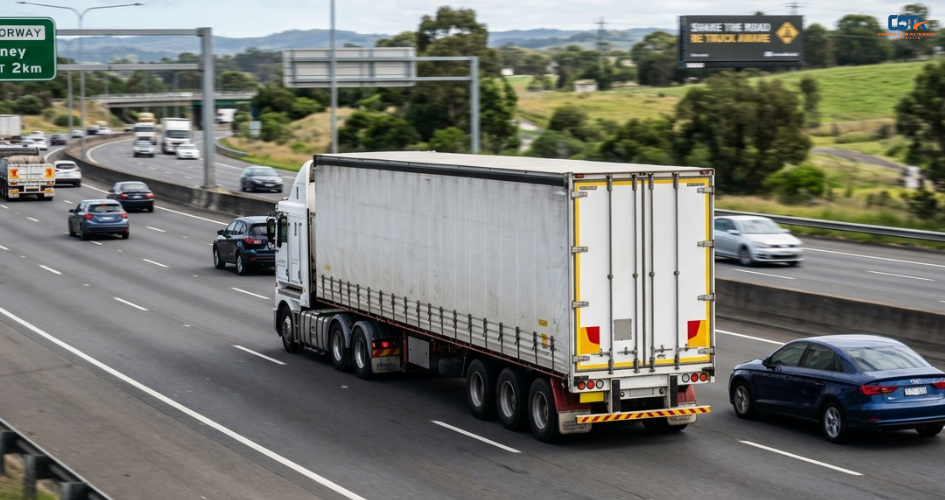
What This Article Covers
In this article, we will explore how drivers can safely share the road with trucks by understanding their blind spots, stopping distances, and turning space, and learning about some safer overtaking habits.
Think the Truck Driver Can See You? Think Again
Being stuck behind a truck while it slowly takes a turn can be an exercise in patience, so feeling frustrated is natural. The urge to get around it or squeeze past quickly can be tempting too. But don’t give in to that temptation. You might be able to see the truck driver’s cabin, so you assume they can see you too. However, a truck is much larger than a car, and the driver may not be able to see you at all. Heavy vehicles have large blind spots, and sitting in one can put you in a risky position without the driver knowing you are there. Trucks also need more room to turn and take longer to stop. A manoeuvre that takes seconds in a car can require considerably more space and time in a heavy vehicle. These are the kinds of risks a defensive driving course can help drivers recognise and respond to more safely. Transport for NSW’s Be Truck Aware campaign highlights some of the unique challenges heavy vehicle drivers face. Understanding how trucks move can help you know when to wait, when to pass, and when to give them more room.
Why Trucks Need More Space
A vehicle’s size, weight, and design affect how the driver sees the road, changes direction, and responds to hazards. So, you cannot handle a heavy vehicle like a truck in exactly the same way as you handle a car. One of the biggest things to remember is that trucks have larger blind spots. If you are travelling alongside a truck where the driver cannot see you, they may not know you are there. Keeping this in mind can help you avoid sitting in a truck's blind spot for longer than necessary. Trucks also need more distance to stop. Cutting in front of one and immediately braking leaves the truck driver with less time and space to respond. This increases the risk of accidents considerably, making overtaking a truck more dangerous.
Give Turning Trucks Plenty of Room
Heavier vehicles need more space to turn, so a truck may need to use more than one lane or take a wider path to complete a turn. So, if you’re waiting beside a heavy vehicle at an intersection, this turn can be quite surprising, especially if you’ve never shared a road with a large vehicle before. So, imagine what would happen if you try to squeeze past a truck that is turning, particularly on the inside? Transport for NSW specifically advises motorists never to overtake a turning truck, especially when turning or navigating roundabouts. Being patient for a few extra seconds is a much safer choice than trying to find a gap that may not actually be there.
What Should You Do Around a Truck?
You can’t treat driving beside a truck the same as sharing the road with another car. A few simple habits can make a big difference when driving near heavy vehicles. One simple rule is that if you cannot see the truck driver's mirrors, there is a good chance the driver cannot see you. Try to move through blind spots rather than travelling alongside a truck for an extended period. Leave plenty of space, avoid sudden lane changes, and take extra care before overtaking. And if you’re a cyclist or a motorcyclist, take extra care. Transport for NSW advises bicycle riders not to pass a truck on the inside and encourages motorcyclists to avoid lane filtering near trucks because of their larger blind spots.
Patience Is a Safety Skill
It is easy to get frustrated when a truck is travelling slowly, taking up more road space, or taking longer to turn. But rushing around a heavy vehicle can create risks that are difficult to recover from. A safer approach is to slow down, give the truck room, and wait for a clear opportunity to pass. These are the same kinds of decisions reinforced through a defensive driving course, where drivers learn to recognise hazards and respond before a situation becomes urgent. For employees who drive regularly for work, defensive driving training for employees can help build stronger awareness of how different road users interact and how small decisions can affect everyone around them.
Make Truck Awareness Part of Driver Training
Businesses with employees who spend significant time on the road should not assume that a licence is all a driver needs to manage every situation. Regular driver training programs can reinforce practical skills such as hazard awareness, safe following distances, speed management, and sharing the road with heavy vehicles. Driver training providers like Corporate Driver Training Australia offer various low-risk and defensive driving courses tailored to meet your business’s requirements. For fleets operating around busy urban roads, motorways, construction areas, or regional routes, such fleet driver training can help drivers develop safer habits that they can use every day.
Share the Road, Don't Fight for It
Heavy vehicles are an essential part of keeping Australian businesses, communities, and supply chains moving. They also have different limitations and challenges to smaller vehicles. For every driver, the safest approach is simple: stay visible, leave space, avoid blind spots, and give turning trucks plenty of room. A little patience can make the road safer for everyone.
Frequently Asked Questions
Q1. What are a truck’s blind spots?
A: Trucks have larger areas around them that the driver may not be able to see clearly, particularly directly behind and alongside the vehicle. If you cannot see the truck driver in their mirrors, avoid assuming they can see you.
Q2. How much space should you leave around a truck?
A: Leave enough space to give yourself time to react and avoid travelling alongside a truck for longer than necessary. You should also allow extra room when a truck is turning or changing lanes.
Q3. Why do trucks need more time to stop?
A: Heavy vehicles are much heavier than cars and generally require more distance to slow down and stop. Cutting in closely in front of a truck can leave the driver with less time to respond if traffic slows suddenly.
Q4. Is it safe to overtake a truck while it is turning?
A: No. Trucks may need additional road space to complete a turn, so attempting to pass while a truck is turning can put you in a dangerous position. Wait until the manoeuvre is complete and there is a safe opportunity to pass.
Q5. Can defensive driving training help drivers around heavy vehicles?
A: Yes. A defensive driving course can help drivers improve hazard awareness, maintain safer following distances, and make better decisions when sharing the road with trucks and other heavy vehicles.