What This Article Covers
Discover how driver training programs help Australian businesses reduce workplace driving risks, minimise operational downtime, improve fleet safety, lower business costs, and support smoother day-to-day operations.
Workplace Driving Risks Are Business Risks
For many Australian businesses, corporate driving is an integral part of business operations, yet one of the highest-risk activities for the drivers. When employees spend hours on the road each week, small driving habits can have a major impact over time. You might think that rushing between jobs, driving distractedly, or having poor hazard awareness are minor things, but these behaviours increase the risk of crashes and increase downtime for businesses. And a single workplace driving incident can create other issues that go way beyond vehicle repairs. It can lead to missed schedules, delayed jobs, overtime costs, and reduced customer satisfaction, which ultimately affects day-to-day operations. And that’s where fleet driver training comes in. Driver training program can help businesses to safeguard their employees and vehicles and improve productivity.
A Single Crash Can Affect More Than Just A Vehicle
If you think that a company vehicle crash affects only the vehicle and the driver, you’re very wrong. The impact of a car crash can slow down a business’s operations almost immediately. From rearranging schedules and compensating for delays to managing repair and replacement expenses and increased insurance premiums, there’s a lot that needs to be managed after a car crash. In industries where timing and reliability matter, even minor incidents can create significant operational pressure. Not to mention the financial burden of related expenses, administration time, and lost productivity. This is why many companies are now treating fleet driver training and defensive driving courses as part of their operational strategy instead of thinking of it as an optional safety measure.
Small Driving Habits Often Lead to Bigger Business Disruptions
Businesses often overlook safe driving habits as unimportant aspects of fleet management. Yet it’s the small everyday habits that gradually increase the risk of accidents over time. Whether it's speeding between jobs, harsh braking, driving tired, or following too closely, such common issues need more attention in workplace driving environments. Employees who spend long hours on the road can develop small habits that may affect their driving, like reduced situational awareness, distracted driving, etc. Despite seeming minor, these habits often contribute to preventable crashes, vehicle wear and tear, and costly downtime.
Businesses that invest in defensive driving training for employees can easily avoid these issues through professional fleet driver training. These driver training programs focus on not just road rules, but also help drivers recognise risks earlier, respond more calmly under pressure, and make safer decisions in real-world driving situations.
Better Driver Awareness Leads to Safer Operations
One of the biggest advantages of professional driver training programs is improved driver awareness. These defensive driving courses teach employees to identify potential hazards earlier, manage distractions better, and maintain safe driving habits even when busy or under pressure. A good driver safety training course typically focuses on practical skills such as:
But don’t think that all these skills are only for new drivers. Even experienced drivers can get valuable techniques and insights to improve their driving. Effective driver training programs can also help make the fleet operations more consistent. When drivers follow safer and more predictable practices, businesses often experience fewer disruptions, smoother scheduling, and reduced operational risk overall.
Safer Driving Also Supports Productivity and Cost Control
Driver training programs do more than prevent crashes. For businesses, these courses are also a great investment that safeguards their employees while also reducing costs and improving operational efficiency. Whether it’s reducing vehicle downtime, tyre and brake wear, and fuel consumption, or reducing repair and maintenance costs, insurance claims and excess payments, safer driving habits play a significant role. When your drivers are reliable and consistent in their performance, it ultimately improves the company’s service standards and operational reliability, thereby increasing customer confidence and building loyalty.
For employees, companies that offer fleet driver training demonstrate that employee well-being and workplace safety are their genuine priorities. It helps the drivers feel valued and supported, reducing stress during work-related travel and increasing their confidence and loyalty.
What Businesses Should Look for in Driver Training Programs
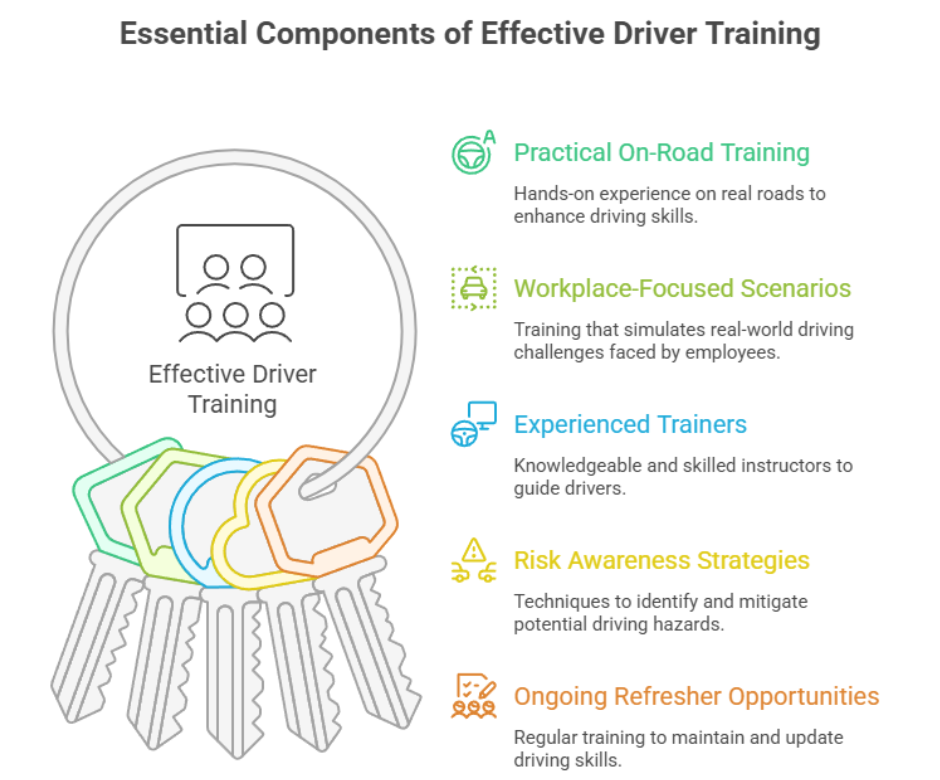
If you’re a business investing in driver training programs, you must know that not all courses bring the same results. That’s why you should choose a training program that caters to your business requirements rather than offering a generic training course. Here’s what you should look for in an effective defensive driving course:
-
practical on-road training
-
workplace-focused driving scenarios
-
experienced trainers
-
risk awareness strategies
-
Ongoing refresher opportunities
A fleet driver training program with all these features ensures the drivers get practical, real-world learning that reflects the challenges employees face on Australian roads every day. Opting for such tailored defensive driving training for employees is a smart move for businesses as it caters to their particular risks and challenges.
Protecting Your Operations Starts with Safer Drivers
Workplace driving incidents affect not just vehicles, but also people and businesses. They can interrupt productivity, delay operations, increase costs, and place unnecessary pressure on employees and businesses alike. By investing in professional driver training programs and defensive driving course for employees, businesses can take proactive steps to reduce risk, minimise downtime, and create safer, more reliable operations. Offering fleet driver training also improves employee efficiency and makes them feel valued and supported.
Many training providers, like Corporate Driver Training Australia, offer tailored training solutions designed to meet the diverse needs and operational driving risks of different industries. If you’re a business looking for a tailored professional driver training program, book Corporate Driver Training Australia’s low-risk and defensive driving courses. Our team of experienced instructors is always ready to help you improve driver performance and reduce the risks associated with driving for work.
Frequently Asked Questions
Q1. How can driver training help reduce workplace crashes?
A: Driver training helps employees improve hazard awareness, defensive driving skills, decision-making, and overall road safety behaviour, reducing the likelihood of preventable workplace driving incidents.
Q2. What are the benefits of fleet driver training for businesses?
A: Fleet driver training can help businesses reduce vehicle downtime, lower repair and insurance costs, improve driver behaviour, and maintain more reliable day-to-day operations.
Q3. What is included in a defensive driving course?
A: A defensive driving course typically covers hazard perception, fatigue management, safe following distances, speed awareness, distraction management, and safer decision-making in real-world driving situations.
Q4. Why is defensive driving training important for employees?
A: Defensive driving training for employees helps reduce workplace driving risks by encouraging safer driving habits, improving awareness, and helping drivers respond more effectively to road hazards.
Q5. Can driver training programs improve operational efficiency?
A: Yes. Effective driver training programs can reduce disruptions caused by workplace vehicle incidents, helping businesses maintain productivity, scheduling reliability, and customer service standards.
Q6. Which businesses benefit most from driver safety training?
A: Businesses with employees who regularly drive for work, including logistics, trades, construction, healthcare, delivery, and corporate fleet operations, can benefit significantly from driver safety training.