What This Article Covers
This article explores how digital driver licences affect fleet compliance, why regular checks matter, and how businesses can build reliable verification processes.
A Licence Check Is More Than a Tick on a Form
If you’re a business managing a large fleet, you would already be keeping track of your vehicles, maintenance schedules, registrations, and driver availability. But before any vehicle leaves for its scheduled journey, it’s important to check whether the driver's licence is still valid and whether it covers the vehicle they are about to operate. For fleet managers, checking driver credentials often becomes an afterthought to all the other things they need to do. However, a driver's circumstances can change after their details are first recorded. Their licence may expire, be suspended, or have conditions added. A reliable licence-checking process is an important part of corporate driver training programs and workplace road safety. It helps businesses confirm that employees are authorised to drive before they get behind the wheel. Driver credentials are no longer limited to the card in someone's wallet. With digital driver licences becoming part of everyday life across Australia, fleet operators need to rethink how they check, verify, and record employee licence details.
What Has Changed with Digital Driver Licences?
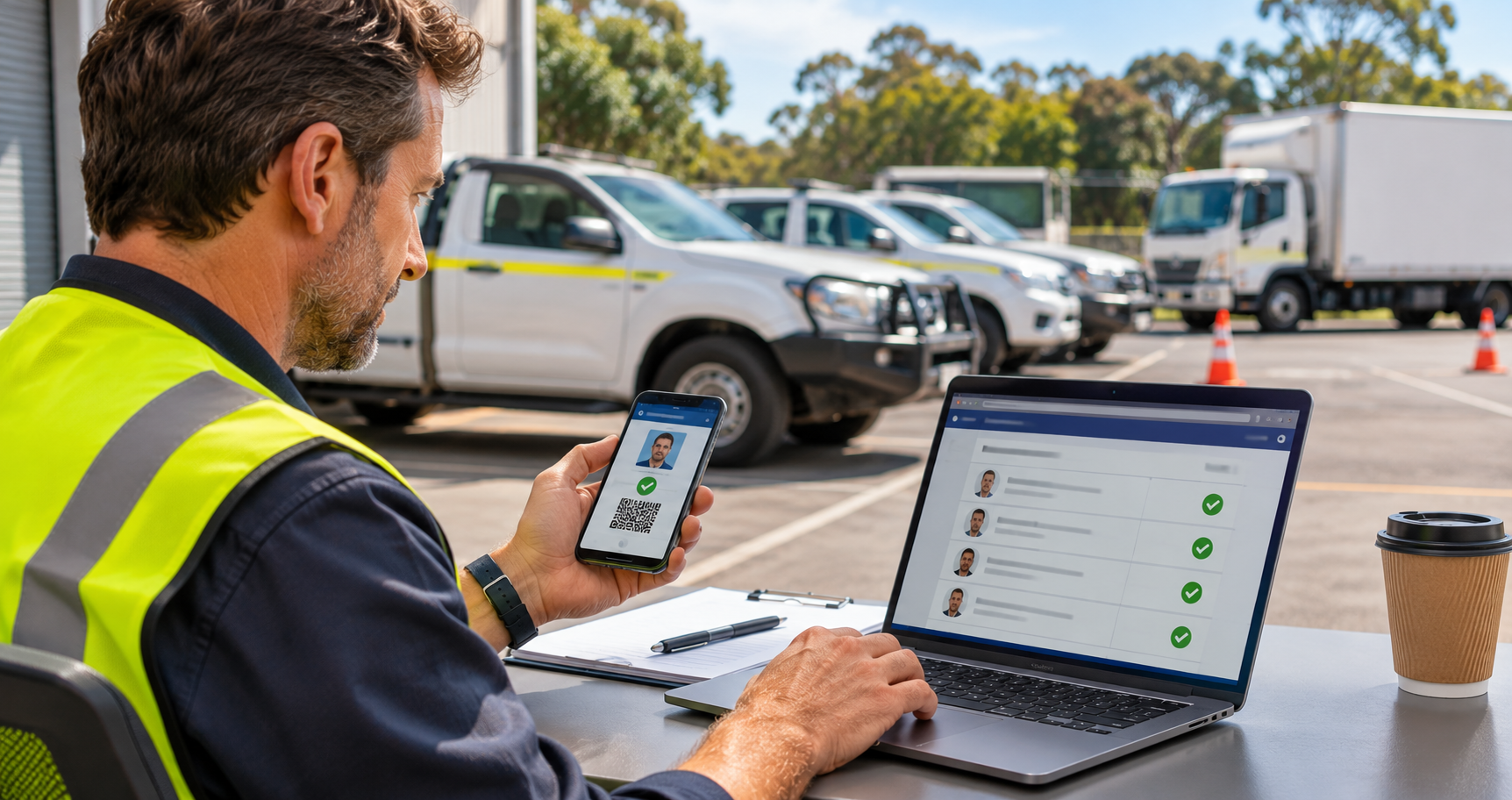
Digital driver licences allow eligible motorists to access and present their licence details through an official digital platform, rather than relying solely on a physical card. Their availability and features vary between Australian states and territories. For drivers, they’re very convenient as your licence is already on your phone. For businesses, though, it forces a rethink of how driver details are actually checked and logged.
Viewing a digital licence on a phone screen isn't the same thing as verifying its credibility. A screen check only shows you what the app is displaying right then. It doesn't prove the licence hasn't been suspended or cancelled since it was last refreshed. Fleet operators should understand the official verification options available in the jurisdictions where their employees drive. They should also avoid relying on screenshots or saved images as proof of current licence status.
Why Regular Licence Checks Matter for Fleet Operators
A licence check completed when an employee joins the business only provides a snapshot of their driving status. Several things can change over time, and businesses need a process that accounts for those changes. Regular checks help fleet managers identify issues such as:
-
Expired licences: An employee may overlook a renewal date, leaving them without a current licence.
-
Suspensions or cancellations: A driver may no longer be legally authorised to drive, even if their physical or digital licence details were previously recorded.
-
Licence restrictions: Conditions may affect when, where, or how someone can drive.
-
Incorrect vehicle authorisation: Holding a standard car licence does not automatically authorise someone to operate every type of fleet vehicle.
If an unlicensed employee crashes a company vehicle, the fallout hits the whole business, leading to voided insurance, WHS breaches, and serious legal liability. A consistent checking schedule helps businesses identify changes before they become problems. The frequency should reflect the nature of the fleet, the vehicles involved, and the organisation's risk management requirements.
Building a Reliable Digital Licence Verification Process
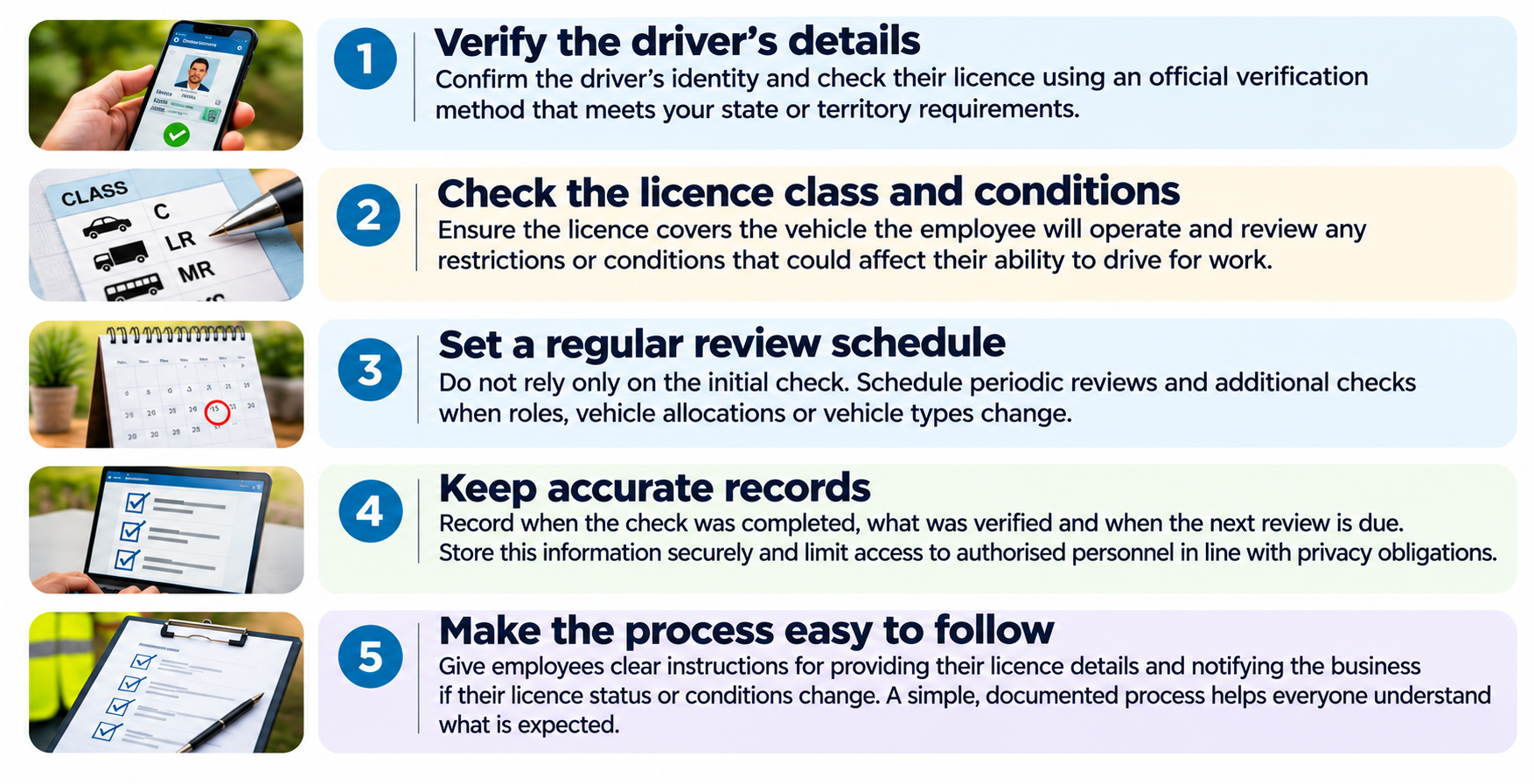
The best verification systems are simple enough that managers actually use them, but thorough enough to catch expired or restricted licences. Fleet managers can build one around a few practical steps.
1. Verify the driver's details
Confirm the driver's identity and check their licence using an appropriate official verification method. Follow the requirements of the relevant state or territory rather than assuming every digital licence works in the same way.
2. Check the licence class and conditions
Make sure the licence covers the vehicle the employee will operate. Review any restrictions or conditions that could affect their ability to drive for work.
3. Set a regular review schedule
Do not rely on the initial recruitment check. Schedule periodic reviews and consider additional checks when an employee changes roles, receives a different vehicle allocation, or is required to operate a different type of vehicle.
4. Keep accurate records
Record when the check was completed, what was verified, and when the next review is due. Store this information securely and limit access to authorised personnel. Businesses should also handle personal licence information in line with their privacy obligations.
5. Make the process easy to follow
Give employees clear instructions about providing their licence details and notifying the business if their licence status or conditions change. A simple, documented process makes it easier for everyone to understand what is expected.
Licence Checks Are Only One Part of Fleet Safety
A valid licence confirms that a person holds the required legal authorisation to drive. It does not necessarily mean they have the practical skills to manage every situation they may encounter behind the wheel. An employee who regularly drives a passenger vehicle may need additional preparation before operating a larger fleet vehicle, towing a trailer, or travelling on unfamiliar roads. Work-related driving can also involve tight schedules, changing traffic conditions, fatigue, and pressure to reach a destination on time. A defensive driving course can help employees recognise hazards, assess risks, and make safer decisions on the road. A driver safety training course can also address workplace-specific risks and reinforce responsible driving behaviours.
For businesses, defensive driving training for employees and structured driver training programs can complement licence verification. Combining regular licence checks with practical driver training programs can cover both bases: you know your team is legally allowed to drive, and you know they can handle the road safely.
Make Driver Verification Part of Your Safety Routine
Digital driver licences may make credentials easier to access, but they do not remove the need for regular checks. Businesses still need a reliable way to verify driver authorisation, keep records current, and ensure employees are suitable for the vehicles they operate.
Licence checks are one part of a wider commitment to safer workplace driving. If your business wants to strengthen its fleet safety practices, contact Corporate Driver Training Australia to discuss tailored corporate driver training programs. Give your employees the practical skills and awareness they need to manage road risks and drive responsibly at work.
Frequently Asked Questions
Q1. How often should employers check their employees' driver licences?
A: There is no single checking schedule that applies to every workplace. Businesses should establish a regular review process based on their fleet operations, risk profile, and relevant legal requirements. Additional checks may be appropriate when an employee changes roles or vehicle responsibilities.
Q2. Can employers accept a digital driver licence as proof of licence status?
A: Digital driver licences are recognised in jurisdictions where they are officially available, but the accepted verification process can vary. Employers should follow the relevant state or territory requirements and use authorised verification methods where available.
Q3. How can a business check whether an employee's licence has been suspended?
A: The appropriate method depends on the state or territory. Businesses should use official government verification services where available rather than relying solely on a physical licence, digital display, or employee-provided screenshot.
Q4. Do fleet drivers need a different licence for different vehicle types?
A: Yes, some vehicles require a higher licence class or specific authorisation. The requirements depend on factors such as vehicle type, weight, and configuration. Employers should confirm that each driver holds the correct licence for the vehicle they are assigned.
Q5. Is checking a driver's licence enough to meet workplace road safety responsibilities?
A: No. Licence verification confirms legal authorisation, but businesses also need to consider vehicle suitability, driver competency, fatigue, journey risks, and safe driving practices. Training and ongoing risk management can help address these wider responsibilities.