What’s the Article About?
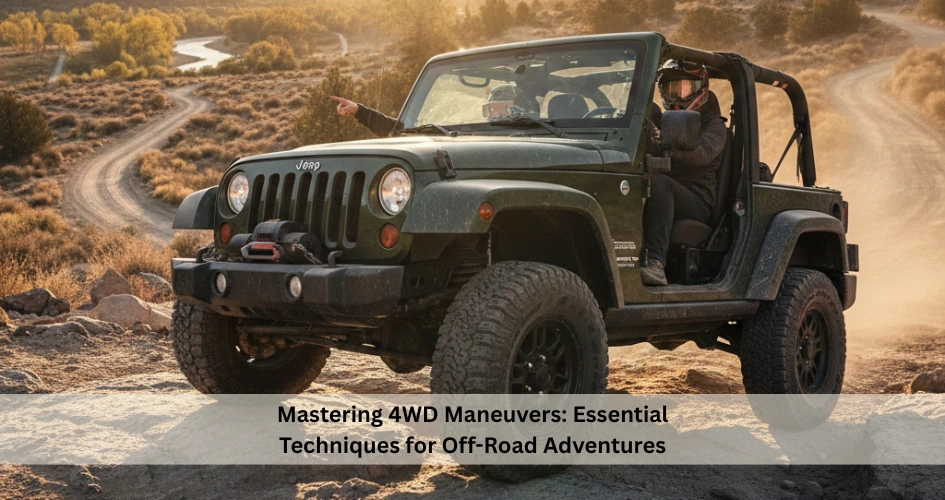
This article covers essential techniques about 4-wheel driving, specificall off-roads. From hill climbing to rock crawling and recovery techniques, this blog prepares you for your first such maneuvers, and if seasoned, reminds you of the same. Learn about off-roading with Corporate Drivers Training Australia (CDTA) and become the master of your own route.
Off-roading is an exciting skill-based activity that requires a level of mastery, and Corporate Drivers Training Australia’s 4WD course delivers exactly the same. It is a comprehensive module that covers all the safety and security measures required to ace the activity.
It is reported that just 4% of Australian SUV owners actually take their vehicles off-road (via CarExpert). Now, a question arises as to whether it is a stigma that off-roading isn’t really safe, or it’s just a preference. A lot of people, including you, might want to go reckless once in their lifetime. The most important thing to note is that safety is the utmost priority while off-roading.
Key 4 Wheel Drive Training Techniques That You Must Know as a Driver
Hill Climbing
One of the boldest moves to pick up in off-roading is Hill Climbing. Packed with a pump of adrenaline rush, this activity requires control, patience, and planning. One wrong momentum judgement can cost a life.
Let’s explore the ways that can help in excelling the 4WD on a hill:
Scouting the Place: Research is the key. The first principle for a 4WD training says that there should be an understanding of the preferred place. For hill climbing, walk a bit in the area to assess the possible dangers and hurdles along the path. Just a couple minute walk will give you an idea of what’s coming ahead.
The First Approach: Make sure you enter the hill straight, as it will help you avoid unnecessary rolling and scraping the underside of your SUV.
Gear Selection: It is advisable to select a slow gear while starting. It will buy you some time to process the terrain and angle ahead of your journey.
Momentum & Throttle: Maintaining a steady momentum will help you in climbing seamlessly without jerks, sudden acceleration, and braking.
Weight plays a role that is seemingly important. It is advisable to distribute weight across your vehicle so that the car doesn’t feel loaded. Apart from this, at any point you feel stuck, apply firm brakes and reverse gently, but without panicking.
Descending Hills
Just like the hill climbing principles, descending hills is on the same way except for a few differences, the basic being going upwards and downwards.
Approach and Prepare: Going upwards can be at times easy, especially with an SUV, but it’s quite the opposite for decline, as you will have to operate on the seemingly lowest possible yet running speed.
Low Gear: Always use a low gear to maximise engine braking. With this, you will be able to maintain a good momentum down the road.
Hill Descent Control: If you are equipped with it, engage the HDC button. In simple words, it will help you to come downhill at an impressively controlled speed.
Steer Position: From every off-road course point-of-view, your steering wheel should be straight while riding downhill. All it does is maintain great stability and structure for the road taken.
At last, if at any point you feel pressured, just calm down and, with all the patience, drive the vehicle extremely slowly.
Rock Crawling
This particular activity requires both precision and patience, as you will feel oscillating throughout the drive. Here are some techniques that you can implement in your adventure.
Be Slow: In the 4-wheel drive training, it is asked to drive at a low speed around 0-20 km/h, to prevent the underbody from scratching.
Placement of Tires: Always try to keep the tyres on high rock points. It will enable the underbody of your vehicle to move seamlessly without hitting the uneven rocks.
Use of Spotter: For commutation in the hilly regions, it is advisable to keep a spotter handy so that you can project the trajectory that you are on.
Mud Driving
Adjudged as one of the favorite pastimes of the SUV and truck owners, mud driving is both fun and clumsy. At the same time, this activity tests your patience and momentum while driving.
Assess the Mud: Research about the preferred area of your activity. It is extremely important to know about the depth of the mud, whether it is hard or sloppy, and the pavements along the route.
Momentum is the Answer: The mud is slippery; therefore, the best way to keep up with the immaculate pace is to keep a steady and moderate speed throughout the journey.
Steering Tactic: It is advisable to keep a straight steering until and unless your vehicle starts to lose traction. In case it is, help the tires to find the grip by wiggling your steer by approximately ⅛ turn.
Sand Driving
Another mind-boggling activity in off-roading is Sand Driving. Floatation and momentum are the keys to passing this adventure.
Momentum Building: As per the 4WD course, it is advised to build the speed before entering the sand and then keep it steady. Since sand is slippery, this technique tests the stability of the driver.
Tire Pressure: Lower tire pressure means more contact area, which in turn means a safe and sound experience while driving.
Steering: Your steering wheel should strictly avoid deep ruts and cuts. Sand’s nature is floating; sharp turns can cause the tire to get rolled off the rims.
In general, if you are off-roading at the beach, find a low tide spot to get better traction. For a legit deserted area, beware of hazards and washouts.
Water Crossings
This off-roading activity, though adventurous, needs a lot of preparation for both the driver and the vehicle. Since water is variable, one must take cautious steps before diving straight into it.
Before You Cross: Per the 4WD course, it is advisable and safe to assess the wading depth, i.e, the maximum depth of water that your vehicle can drive through without any dysfunction. Thoroughly inspect the crossing by walking (if possible) through it. If things feel awry, instantly divert your path. Before going in, close all the doors and storage. You need to keep your window slightly open for circulation.
During the Crossing: Make sure to use 1st or 2nd gear to keep things in control. Maintain a steady speed to cross the river. Your vehicle should make a bow wave that pushes water away from the engine to prevent it from flooding. Last but not least, do not accelerate a lot.
After the Crossing: You’ve made it to the final mark! Your vehicle now needs to be dried. Get to a safe spot and let your traveller’s undercarriage drain. For dry brakes, press the (brake) pedal a couple of times and restore braking power.
Side Slopes
One of the most focus-skilled activity is Side Slopping. They are clean, direct, and you will legitimately feel that it’s the force that’s pushing you (downwards). One needs to be extremely vigilant while signing up for it.
Safety First-Approach: As per the 4WD training proficiency guidelines, one must avoid extremely challenging slopes entirely. You need to understand the fatality level that can pass through if, at any moment, certain control is lost.
Search for Well-Known Tracks: It might consume your time and energy, but it is advisable to follow a path that most others are on. The ground should be free of any mere obstacle.
Manageable Speed: It is essential to gradually increase or decrease momentum and throttle speed while enroute the slope.
Assess the Terrain: Per the 4WD lessons, always keep a check on the trails you are taking. One minor mistake or forgetfulness can cause major hazards.
Recovery Techniques
After naming at least 7 off-roading adventures, it’s now time to wind down the topic. Recovery techniques can help you know what and how to manage after a memorable escapade. Though you might know by yourself, let us make your work easier:
The Initial Steps: Reduce the tire pressure for a good grip in terrain-ridden areas (mud, sand). Whenever you enroll for an off-road trip, make sure to keep traction boards and tools like a shovel. It becomes easy to clear mud, sand, and gravel from sticking to your vehicle.
With Anchor (Help): Winching is the technique through which you can pull your vehicle in the direction preferred. It is a machine with a rope attached to a drum. The rope helps to move. You need to use a secure anchor point and a dampener on the line, securely attach tow straps, and use traction boards on slippery surfaces.
Apart from this, always keep recovery tools like Kinetic Ropes, D-Shackels, good quality and heavy-duty Gloves, and Tree Saver Strap to assist you during a chaotic moment.
At last, off-roading can be amazing and an explorative exercise, but always remember to incline towards technique over speed. It will provide longevity and a more heightened experience. Just like Corporate Drivers Training Australia’s 4WD training encourages practice and preparation to the core, rely on correct sources for the right information.
With safety, confidence, let’s spread the word about off-roading and master the manoeuvres together, building our own trail!
FAQs
1. Why is 4WD training important before off-roading in Australia?
A. 4WD training is such a complete course that helps drivers understand terrain behavior, vehicle control, and safety measures. It reduces the risk of hazards across the tour.
2. What is the biggest mistake beginners make while hill climbing in a 4WD?
A. The most common mistake is poor momentum judgment. Accelerating too aggressively or braking suddenly can lead to loss of control.
3. Does lowering tire pressure help in sand and mud driving?
A. Lower tire pressure increases the contact area between the tire and the surface. It improves friction and reduces the chances of getting stuck in soft terrain.
4. Is water crossing safe for all SUVs?
A. No. Water crossing safety depends on the vehicle’s wading depth and driver technique. Assessing the depth and flow thoroughly will help a lot.
5. What recovery equipment should every off-road driver carry?
A. From traction boards, tow straps, a winch, kinetic ropes, to D-shackles, gloves, and a shovel for clearing terrain obstacles.