Source: canberratimes.com.au
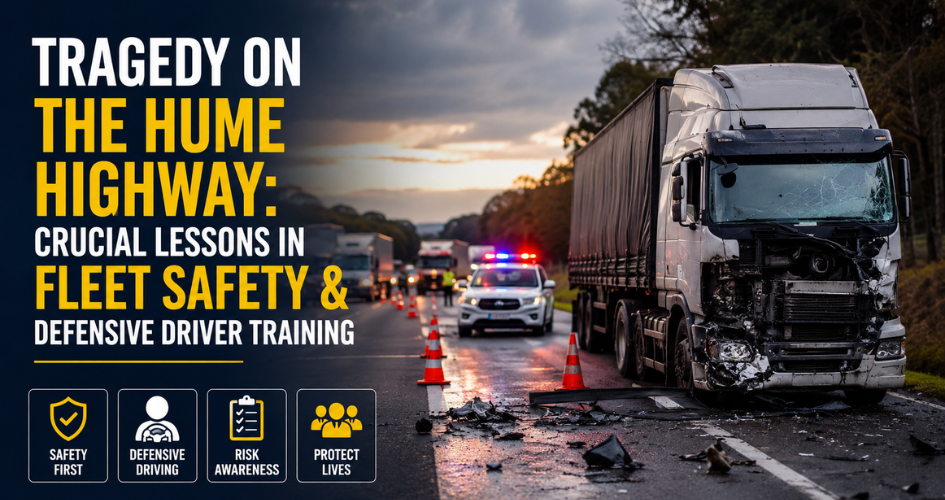
The Australian road freight network operates around the clock, with key corridors like the Hume Highway carrying thousands of heavy vehicle movements daily. However, recent tragic accidents on this major freight line serve as a stark reminder of the inherent hazards faced by professional drivers—particularly during night shifts and stationary breakdown scenarios.
Preventing high-speed highway collisions requires more than basic vehicle operation; it demands structured defensive driver training that prepares commercial operators for unexpected hazards, night-time glare, and emergency roadside situations.
Key Risk Factors in Night-Time Highway Scenarios
Analyzing high-speed corridor collisions highlights several recurring operational risks that commercial fleet operators must actively address:
-
High-Speed Differential: Approaching traffic traveling at 100 km/h covers almost 28 meters per second, drastically reducing reaction time when encountering stationary hazards.
-
Nighttime & Fatigue Hazards: Limited visibility combined with driver fatigue during early morning hours increases the likelihood of delayed hazard detection or spatial misjudgment.
-
Lack of Emergency Preparedness: Without practical, hands-on defensive driving programs, drivers may panic or mismanage critical emergency procedures during breakdown events.
Essential Breakdown Safety Protocols for Fleet Operators
To safeguard drivers and reduce road risks, every commercial driver must strictly adhere to breakdown Standard Operating Procedures (SOPs):
-
Immediate Safe Positioning: Pull off as far to the left shoulder as safe; engage hazard lights and park lights immediately.
-
Early Radio & Fleet Warning: Broadcast location details over local UHF radio channels to alert nearby truck drivers immediately.
-
Advance Warning Triangles: Deploy reflective safety triangles as per heavy vehicle compliance guidelines.
-
Personal Protective Equipment (PPE): Wear high-visibility clothing before exiting the cabin, especially in low-light conditions.
How CDTA’s Defensive Driving Course & Programs Protect Your Fleet
At Corporate Driver Training Australia (CDTA), we specialize in delivering tailored fleet safety solutions designed to minimize on-road incidents and safeguard drivers across Australia.
-
Comprehensive Defensive Driving Course: Our industry-leading defensive driving course teaches drivers spatial awareness, hazard perception, safe following distances, and advanced vehicle control under adverse conditions.
-
Customized Defensive Driving Programs: We develop specialized defensive driving programs tailored specifically for corporate fleets, heavy vehicles, and high-risk regional driving corridors.
-
Practical Defensive Driver Training: Our practical defensive driver training modules cover roadside emergency management, breakdown SOP execution, fatigue mitigation, and Chain of Responsibility (CoR) compliance.
Enroll Your Fleet in a CDTA Defensive Driving Program Today
Protect your drivers, lower fleet risk, and maintain compliance. Contact Corporate Driver Training Australia to enroll your team in a professional defensive driving course today.