What This Article Covers
Discover how defensive driver training supports Australian WHS responsibilities, improves workplace driving safety, reduces business risks, and helps organisations create safer, more compliant driving practices.
When Driving Is Part of the Job, Safety Matters
If you’re an employee who needs to drive regularly as part of your job, you’d know how essential safety is for corporate drivers. Businesses often invest heavily in workplace safety for offices, warehouses, and construction sites, fleet driver training for workplace driving is often overlooked.
Whether they’re delivering goods, visiting worksites, or transporting equipment, corporate drivers face many challenges and unique risks while driving for work. Moreover, they also deal with time pressure, unfamiliar routes, fatigue, distractions, changing road conditions, and other issues that increase the risk of accidents. By providing defensive driving training for employees, businesses can address their safety concerns, reduce the risk of accidents, improve their driving performance, and also lower operational costs through fuel-efficient driving and vehicle maintenance training. It’s not mandatory under Australian Work Health and Safety (WHS) laws for businesses to provide driver training. However, WHS laws say employers must manage workplace risks as much as they reasonably can.
Understanding Your WHS Responsibilities
Under Australian WHS laws, employers have a duty of care to ensure their workplace and environment are both safe for their employees. For corporate drivers, the vehicle is their workplace, so employers must manage the risks associated with driving accordingly.
Workplace driving presents a range of hazards that employers cannot ignore. From fatigue, distraction, and driver behaviour to vehicle conditions and poor weather, corporate drivers face many challenges that can potentially lead to serious incidents. So, is defensive driving training a legal requirement for businesses in Australia? Not really. Under the WHS law, businesses are expected to take reasonable steps to protect employees from foreseeable risks. While the law does not state businesses must provide a defensive driving course specifically, it does expect employers to ensure their drivers’ safety. But for most businesses, defensive driver training is one of the most practical and effective ways to demonstrate their commitment to employee safety.
Why Workplace Driving Deserves Special Attention
Most businesses don’t consider workplace driving very risky, often relying on the driver’s licence to assume they have the knowledge and skills to drive safely. They don’t realise that, unlike other workplace hazards, driving takes place in constantly changing environments that employers cannot fully control. Corporate drivers have to struggle with heavy traffic, unpredictable drivers, poor visibility, roadworks, or long hours behind the wheel, often all within a single day. With such dynamic risks, relying solely on the driver’s license as validation for safe driving skills is not enough.
A licence only confirms the driver’s ability to meet the minimum legal standards of driving. It does not mean they’re equipped to recognise and respond appropriately to the additional challenges and risks associated with workplace driving. Providing structured training helps employees to develop stronger hazard perceptions, improve their decision-making, and adopt safer driving behaviours. This reduces the risk of accidents and improves their performance.
How Driver Training Supports WHS Compliance
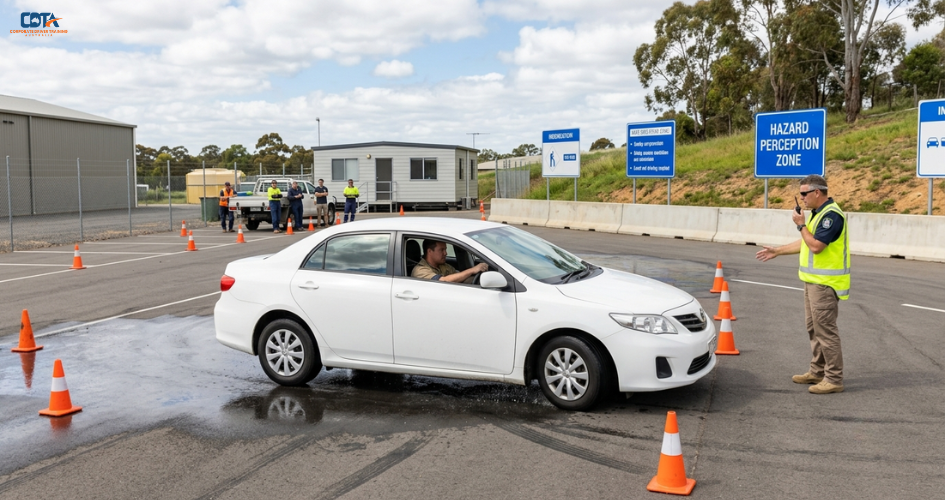
Driver training isn’t about refreshing the employees’ basic driving skills. A good professional driver safety training course should help improve their hazard perception, judgement, decision-making, response to changing road conditions, and their ability to manage fatigue and distractions. And if you’re operating multiple vehicles, you can standardise your driver safety and compliance rules across the workforce with proper fleet driver training.
When every driver follows the same safety principles, it can help businesses to reduce the risk of incidents, improve accountability, and strengthen safety. Fleet training also shows your commitment and proactiveness in managing workplace driving needs. When you combine professional driver training with vehicle maintenance, clear driving policies, and ongoing supervision, you can have a much stronger approach to workplace safety than relying on licenses alone.
The Benefits Go Beyond Compliance
WHS compliance is certainly a very important aspect for businesses. However, fleet driver training has many other benefits beyond compliance:
Reduced Operational Costs and Increased Efficiency
Investing in defensive driving training for employees is not an expense but an investment. Defensive driving courses can help increase drivers’ efficiency by improving hazard perception, leading to fewer vehicle incidents, reduced downtime, and lower repair costs. Safer driving habits can also reduce unnecessary fuel consumption and minimise wear on company vehicles, leading to lower operating costs over time.
Improved Confidence in Drivers
Driver training programs help drivers to identify hazards early and respond calmly in challenging situations, making them better able to protect themselves, their passengers, and other road users. With better driving skills, improved road awareness and alertness, drivers also feel more confident behind the wheel.
Strong Workplace Culture and Employee Value
One of the key benefits of driver training is building trust and employee loyalty. Organisations that prioritise workplace driving send a clear message that employee safety is valued. Their commitment to driver safety and setting safety standards in the workplace helps strengthen work culture while ensuring due diligence should incidents ever be investigated.
Building a Safer Workplace Starts on the Road
Australian WHS laws may not specifically require every employer to provide defensive driver training programs, but they do require businesses to take reasonably practicable steps to manage workplace risks. For organisations hiring corporate drivers, investing in defensive driving training for employees is a logical and proactive way to meet those responsibilities.
Think of it as an investment in safer employees, stronger operational performance, and long-term risk reduction. By combining workplace policies with practical driver education, organisations can build a culture where safety continues long after employees leave the office.
At Corporate Driver Training Australia, we help businesses develop safer, more confident drivers through practical training designed for real workplace conditions. Whether your organisation operates a single company vehicle or an entire fleet, investing in our professional driver training programs today can help protect your people and your business tomorrow.
Frequently Asked Questions
Q1. Is defensive driver training mandatory under Australian WHS laws?
A: No. Australian WHS laws do not specifically require businesses to provide defensive driver training. However, employers are required to manage workplace driving risks so far as is reasonably practicable.
Q2. Why is workplace driving considered a WHS risk?
A: When employees drive as part of their job, the vehicle becomes an extension of the workplace. Employers are therefore expected to identify and manage driving-related risks, just as they would any other workplace hazard.
Q3. How does a defensive driving course support WHS compliance?
A: A defensive driving course helps employees recognise hazards, improve decision-making, and adopt safer driving habits. It also demonstrates that a business is taking proactive steps to reduce workplace driving risks.
Q4. Who should complete driver safety training?
A: Any employee who regularly drives for work, including sales representatives, field technicians, delivery drivers, managers, and executives, can benefit from professional driver safety training.
Q5. What are the benefits of fleet driver training?
A: Fleet driver training promotes consistent driving standards across an organisation, helping reduce incidents, improve safety, lower operating costs, and strengthen workplace accountability.