What This Article Covers
This article discusses how eco-driving techniques, fleet training, and smarter vehicle management can help businesses reduce fuel consumption, lower operating costs, and improve fleet efficiency without compromising productivity.
Fuel Costs Are Driven by More Than Fuel Prices
With fuel prices at an all-time high and current conditions hinting at possible fuel shortages, it’s natural for businesses to look for ways to reduce fuel consumption and costs. While you cannot control fluctuating fuel prices, you can control how your vehicles are driven every day. And that’s where professional corporate driver training and eco-driving techniques come in. Instead of looking for expensive technological vehicle updates, eco-driving focuses on improving your fuel efficiency through smarter driving habits. Just a few simple changes in the way you drive can help reduce fuel consumption, operating costs, and vehicle wear. And with professional corporate driver training, businesses can teach these efficient driving techniques to their employees, helping fleets reduce fuel consumption by 10% to 15%. When those savings are multiplied across an entire fleet, the financial benefits can be substantial.
Small Driving Habits Create Big Fuel Bills
While well-maintained vehicles are important, driver behaviour is one of the biggest factors influencing fuel consumption, which most businesses overlook. As a driver, your daily habits like accelerating rapidly, braking suddenly, keeping the vehicle idle too often, and not managing speeds can significantly increase fuel use. Similarly, if your vehicle is carrying excessive weight, heavy tools, or cargo, it forces the engine to work harder, consuming more fuel over time. You might think of them as routine behaviour, not realising how much they contribute to increasing your operating costs. It’s not about a single harsh acceleration or sudden braking. But if such driving is a habit, repeated hundreds of times across multiple vehicles and other drivers, then the impact on the vehicle is quite big.
Small changes in driving habits are often more effective in reducing fuel consumption. Structured corporate driver training through a low-risk driving course can help drivers understand and implement effective fuel-saving techniques.
Practical Eco-Driving Habits Every Fleet Driver Should Know
-
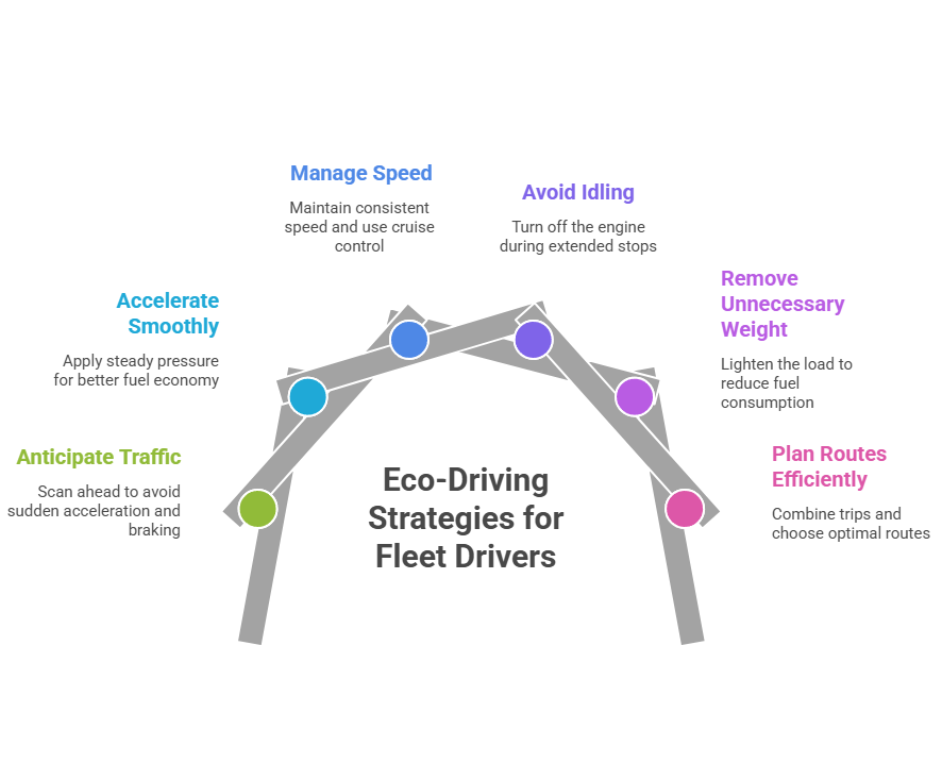
Anticipate Traffic and Drive Accordingly
When you don’t know how the traffic is going to flow, you end up accelerating and braking repeatedly, which uses up more fuel. However, if you learn to scan the road ahead of you and anticipate traffic conditions, you can guess when the traffic is slowing down and prepare beforehand for traffic lights, intersections, and other potential hazards. This helps you drive smoothly, accelerating and slowing down with ample time. It helps reduce fuel consumption while also minimising brake wear.
When you accelerate too fast or suddenly, it places additional demand on the engine, making it consume more fuel to work faster. So, if you learn to accelerate smoothly and apply steady pressure, it won’t put undue pressure on the engine. This will help you achieve better fuel economy while also maintaining better vehicle control.
Most people don’t realise what impact speed has on fuel consumption and engine function. When you maintain a consistent speed while driving, it reduces engine load and fuel consumption. This helps improve efficiency during longer trips. When road conditions are suitable, you can also use cruise control to minimise unnecessary speed fluctuations. Most professional corporate driver training programs emphasise proper speed management in eco-driving techniques.
-
Avoid Keeping the Vehicle Idling
Reducing unnecessary idling is another simple but effective eco-driving strategy. When your vehicle is stationary or idling, it can still consume a lot of fuel. And across a fleet, even small amounts of individual fuel consumption can quickly add up to a lot of collective fuel use. Turning off the engine during extended stops can help reduce waste.
-
Remove Unnecessary Weight
When a vehicle is carrying weight, the more it carries, the more fuel it uses. That’s why low-risk driving courses teach drivers to avoid carrying unnecessary weight to reduce fuel use and operate more efficiently. You should review your vehicle weight regularly and remove unused tools, equipment, roof racks, and excess cargo whenever possible.
Route planning can also have a significant impact on fuel use. You can reduce fuel consumption by combining trips, avoiding heavy congestion, and selecting more efficient routes. It can also reduce travel time, minimise idling, and improve productivity.
Small Changes Deliver Significant Results
It’s not just fuel prices that influence fuel use in business operations. Driver behaviour also plays a major role in determining how much fuel a fleet consumes each day. It’s high time businesses start using eco-driving techniques and support them through ongoing corporate driver training, feedback, and vehicle maintenance. These small changes can help them achieve meaningful reductions in fuel costs while also improving safety, sustainability, and operational performance.
At Corporate Driver Training Australia, we offer a wide range of corporate driver training services to help organisations and drivers build safer, more efficient driving habits that reduce fuel costs and improve fleet performance. Enrol in our low-risk driving courses today and learn the best eco-driving techniques to reduce your fuel use and improve your productivity and efficiency.
Frequently Asked Questions
Q1. How much fuel can eco-driving save?
A: Many fleets achieve fuel savings of around 10% to 15% through consistent eco-driving practices and driver training.
Q2. What is eco-driving?
A: Eco-driving is a set of driving techniques that focuses on smooth acceleration, efficient speed management, reduced idling, and better route planning to improve fuel efficiency.
Q3. How does corporate driver training reduce fuel costs?
A: Corporate driver training helps drivers develop fuel-efficient habits that reduce unnecessary fuel consumption and improve overall fleet performance.
Q4. What role does telematics play in fuel efficiency?
A: Telematics systems monitor driving behaviours such as speeding, harsh braking, and idling, helping businesses identify opportunities for improvement.
Q5. Is eco-driving included in a low-risk driving course?
A: Yes, many low-risk driving course programs include eco-driving principles because fuel-efficient driving habits often align with safer driving practices.
Q6. Why is route planning important for fuel efficiency?
A: Efficient route planning helps reduce unnecessary travel time, congestion, idling, and fuel consumption across a fleet.