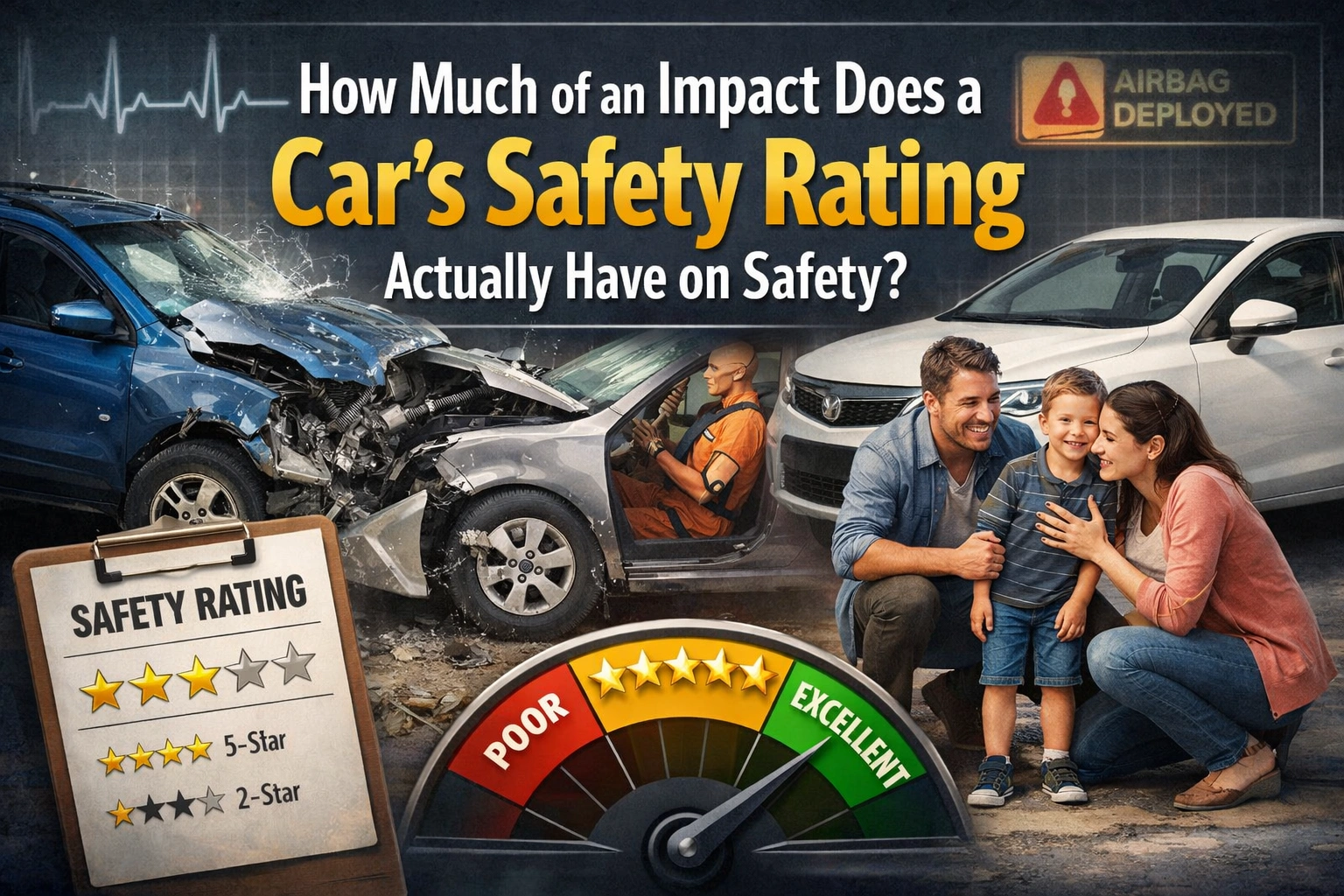
What's the Article About? Car safety ratings reduce injury impact but do not avert accidents. Real-world safety improves significantly when safe vehicles are paired with a low-risk driving course or professional corporate driver training services.
Do you also agree with the fact that while we are en route to the destination, it’s the only thought in our minds to reach it safe and sound? Since road accidents are becoming common these days, a car’s safety ratings become questionable at some point. Although justifiable, it also depends upon the driver who’s been driving the vehicle. ANCAP, or the Australasian New Car Assessment Programme, which provides the safety ratings to a car on the basis of crash tests, occupant protection, and active collision avoidance technology, can help up to a limit, after which it comes down to the driving skills.
Many facilitators, like Corporate Driver Training Australia, have been focusing on providing and equipping drivers with the knowledge of low-risk driving course. It is not only a professional approach but also critical to those who are engaged with managing business fleets and employee-focused driving.
What Really Makes the Difference: Safety Ratings or Real-World Safety
To think of it, there is a gap in understanding car safety ratings and real-road safety. Many people assume that once a vehicle passes the safety ratings barrier, it is safe to drive. But little do they think about how controlled such crash tests and simulations happen. Car safety ratings will only measure how well a vehicle can protect its occupants during a crash. But it will not help you anticipate about one. Therefore, this particular distinction itself makes a lot of difference.
Take a situation: a driver, who is driving a five-star rated vehicle at an alarmingly high speed, is distracted or under fatigue versus the one who is driving a three-star rated vehicle with utmost attention and vigorous hazard anticipation. The first one is definitely en route for a perilous situation, while the second one has the mind to simulate defensive training and risk management lessons.
Even if a vehicle is a ten-star rated (analogically), it is the driver’s primary responsibility to drive safely with a gawk on the roads. It’s the driver’s decision to prevent incidents in the first place. This particular gap is where the things get awry. The difference between a vehicle being safeguarded doesn’t have to be mixed with childish driving.
How Does Corporate Driver Training Help in Road Safety?
Professional corporate driver training lays down the basic principles of driving better. Some of them are:
-
Reading traffic patterns thoroughly before making a decision
-
Maintaining following distance between two vehicles, regardless of vehicle technology
-
Knowing to adjust the driver style with regard to weather conditions, fatigue, or load conditions
-
Learning about how to avoid over-reliance on technically sound driver-assist features in the vehicle
Although today, cars and other vehicles are equipped with special and focused driver assistance systems, how can judgement while driving be compared to it? Overconfidence always leads to risk, as one does not think about logic in those times. Therefore, risk management and compensation are basic lessons of the low-risk driving course.
Corporate Driver Training Australia, or CDTA, directly addresses this issue. Instead of talking about fear-based thought processes, such training organisations focus on training the drivers to operate in the best manner while complying with all the safety measures, predicting risks, and managing uncontrollable situations, if any.
How Do Corporate Driver Training Services Come In Handy for Businesses?
Till now, we’ve talked about just a normal perspective. Let’s talk about businesses, which already operate on higher stakes. Adding such a haphazard thing, it’s just a cherry on the cake! In the workplace injuries scenario, vehicle incidents are one of the major causes. This is the exact reason why such corporate driver training services step up to meddle for good.
In the real corporate world, it’s mostly about driving sense and management. It becomes the duty of the business to hire drivers who are experienced and do not go the other direction while driving, since it’s the employees who might suffer if not taken care of. Once the drivers understand about how things work, it becomes easy to foresee problems ahead on the road.
Safety ratings do not account for local or all kinds of driving conditions. Australian roads vary widely: from urban congested roads to long rural stretches, every factor contributes to driving, be it wildlife, speed, road fatigue, etc. In short, such ratings are a strong foundation, but they are implicit. In the end, it will be more about how well a driver is trained to tackle a situation.
Final Thoughts: What Meaning Does the Talk Imply
Although the Australian government and organisations have simplified and voiced out the rule of six-year relevance of the vehicle’s safety standards, it is a sole responsibility to drive safely and well. So, does the car rating impact safety? Yes, but only up to a point. If rating contributes 30%, it’s 70% the driving and the driver’s instincts to perform with responsibility, accountability, and credibility, especially in the corporate sector. Therefore, Corporate Driver Training Australia’s extensive module on low-risk driving course is not just a talk but the real deal. The message is clear:
‘The safest vehicle is only as safe as the person behind the wheel.’
FAQs
1. Do car safety ratings alone make driving safer?
A. No. Although they reduce injury impact, they don’t necessarily prevent accidents or hazard-ridden situations.
2. Why take a low-risk driving course?
A. A low-risk driving course helps drivers to judge and avoid risks before crashes occur.
3. Is corporate driver training necessary for experienced drivers?
A. Yes. Corporate driver training helps in the improvement of judgement, driving awareness, and consistency.
4. Why choose corporate driver training Australia programmes?
A. It is because it is specifically designed for and keeps in mind the Australian roads, conditions, and driving risks.
5. What do corporate driver training services focus on?
A. Corporate driver training primarily focuses on behaviour, risk reduction, and safety performance.