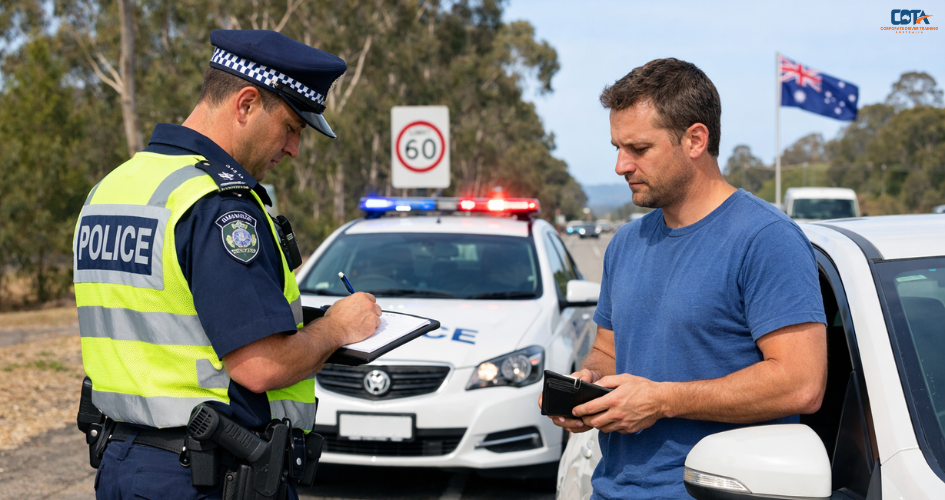
What’s the Article About? Some Australian cities have significantly higher traffic fine rates due to strict rule implementation. low-risk driving course help drivers avoid costly penalties.
Driving in the Australian subcontinent is generally safe and sound, but certain cities are quite well-known for their strict rules and regulations and high number of traffic infringements. So, whether you are a daily commuter, a visitor, or part of the company fleet, always know about the fines that can help you avoid costly mistakes. It is because traffic penalties in Australia aren’t just minor inconveniences, but they can even run into hundreds or thousands of bucks. Moreover, they can also add demerit points, increase insurance premiums, and, in major cases, lead to licence suspension! Many organisations enroll in low-risk driving course for their employees in this regard. It not only teaches about how to juggle through the situation but also prepares a driver for any future nuisance.
Without any further ado, let’s understand four major locations wherein the drivers frequently get fined, but also how smart habits can help evade such things.
Sydney
The heart of Harbour Bridge and Opera House, Sydney, is unforgettable not just in its enthralling tourist attractions but also in the rules and regulations. One of the reasons is that the city is the most populous in Australia. Therefore, it consistently ranks among the top cities for traffic offences. Due to busy tunnels, busy intersections, and an extensive motorway network, the enforcement here is highly visible and automated.
Common Offences: Speeding even slightly over the limits, red-light violations, illegal turns, and mobile phone usage while driving.
Smart Driving Tips: Make sure that your vehicle’s cameras are always active. Try to maintain consistent speed while driving, especially when approaching intersections, tunnels, and variable speed zones. For corporate drivers navigating Sydney’s demanding roads, signing up for CDTA’s low-risk driving courses for corporate drivers can help in improving hazards and judgements while complying with the regular government laws.
Melbourne
The city thrives on art and culture, which also shows its rich heritage and deeply rooted traditions. From the Melbourne Cricket Ground to the Royal Botanic Garden, this coastal capital of Victoria follows road rules, particularly around trams and hook turns. Combined with strict CBD (Central Business District) enforcement, the penalties are frequent for both the locals and the tourists.
Common Offences: Incorrect hook turns, blocking intersections, speeding in low-speed zones, and failing to give way to trams can lead to a hefty pinch on the pockets.
Smart Driving Tips: It is important to watch the signage carefully. If you are unfamiliar with hook turns, it is best to slow down and observe other vehicles before proceeding. Drivers who are unsure about the city navigation and defensive positioning can easily benefit from the defensive driving course. This will not only sharpen decision-making but also give better judgement in complex urban environments.
Brisbane
Australia’s most biodiverse and greenest city also cannot refrain from keeping itself away from road safety and regulations. Fines in the city are common because Brisbane is a mix of highways, suburbs, and time-based school zones, which creates a high-risk environment for unintentional violations.
Common Offences: Speeding in the schooling zones, seatbelt violations, mobile phone usage while driving, and tailgating are numbered as general offences of the many.
Smart Driving Tips: To avoid getting fined, it is best to check time-based speed limits. It is because the school zones operate during specific hours and are heavily inspected. For the drivers operating larger vehicles, a low-risk 4WD training course will assist in improving vehicle control and awareness during awry conditions.
Perth
The fourth-most-populous city in Australia, Perth has to have rules that can keep peace all over. Although it might be less congested than other eastern cities, the implementation of the rules remains strict, which is fair. Speed camera trailers, red-light cameras, and random breath testing are widely used.
Common Offences: Speeding, running over red lights, drink-and-drive, and seatbelt offences are considered major problems.
Smart Driving Tips: It’s best to not think over-the-top and assume that quieter roads mean relaxed enforcement. Always maintain legal speeds and avoid any kind of offence as noted above. Fleet drivers and long-distance operators can benefit from a low-risk trailer towing course. It will come in handy, especially while handling loads, caravans, or equipment.
Conclusion: Awareness Not Only Saves Money But Also Lives
Getting fined is definitely frustrating, but administering preventive measures can save you from any mishap. Even if you’re driving through Sydney’s heavy traffic or Melbourne’s rule-intensive CBD, awareness is your best friend. Because as Corporate Driver Training Australia believes and everyone knows that when you’re driving on the Australian roads, it’s not really about reaching your destination but getting there safely and responsibly.
FAQs
1. Which Australian cities issue the most traffic fines?
A. Cities, including Sydney, Melbourne, Brisbane, and Perth, are widely known for strict implementation and high-penalty rates.
2. What are the most common offences leading to fines?
A. Speeding, red-light violations, mobile phone use, seatbelt offences, and school zone breaches are the main offences counted for fines and other penalties.
3. How can a low-risk driving course help?
A. It helps in improving hazard perception, speed management, and defensive driving behaviour to reduce violations.
4. Are defensive driving lessons useful for experienced drivers?
A. Yes. They refine reaction strategies, awareness, and risk anticipation skills.
5. Why should corporate drivers consider training?
A. Low-risk driving courses, like that of CDTA, for corporate drivers help in reduction of accidents, fines, insurance costs, and liability risks.