What’s the Article Talking About?
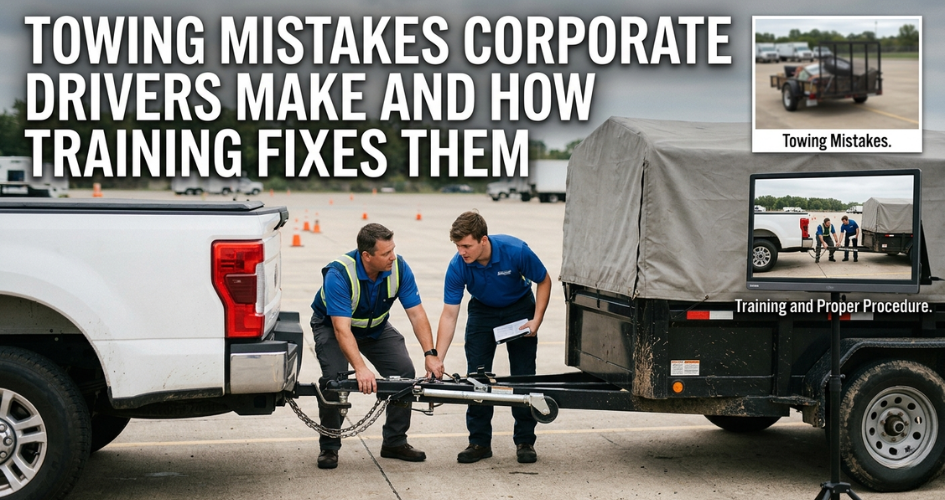
This article highlights the most common towing mistakes corporate drivers make and explains how structured training, like a trailer towing course or caravan towing course, can fix these issues, improve safety, and boost overall fleet efficiency.
You own a vehicle-reliant business, and you come across damaged assets and compliance issues! Is it really just the vehicle that was old and wearing out? Maybe you also need to address the poor towing practices of your drivers, which might actually be draining the vehicle’s efficiency. The fix? A hands-on CDTA’s trailer towing course that turns average drivers into confident and shining operators.
To get an overview, what do you think must happen to fix towing mistakes? Well, although it depends on what the companies do, you need to follow the 6 steps to be ahead of everyone. Starting from audits and identifying gaps to training and testing, it’s just the foundation. But the real win is when you can monitor positively and improve as per the performance outcome.
-
Audits: You need to compulsorily evaluate current towing practices, incident reports, and driver confidence levels.
-
Identifying Gaps: Spot recurring errors, like overloading, poor reversing, and braking issues, that need to be addressed on the spot.
-
Training: After the assessment, you must enrol drivers in a trailer towing course or caravan towing course.
-
Test: With practical assessments in real-world conditions, you’ll be able to know their behaviours and overall performance.
-
Monitor: Use telematics technology and supervisor feedback to know who’ll stay and who must leave.
-
Improvements: Once hands-on, with continuous learning cycles and refresher towing courses, your potent drivers will be able to take over the roads without any discrepancies.
Let’s break the topic down to understand the root cause with a smart approach that mirrors how real fleet operators will be able to improve performance.
The Most Common Trailer Towing Mistakes Are
|
MISTAKES
|
OUTCOMES
|
REAL-LIFE IMPACT
|
|
Overloading trailers
|
Exceeds vehicle capacity
|
Brake failure, fines
|
|
Poor weight distribution
|
Trailer sway
|
Loss of control
|
|
Inadequate braking distance
|
Late braking
|
Collisions
|
|
Incorrect hitching
|
Loose or unsafe coupling
|
Detachment risk
|
|
Weak reversing skills
|
Jackknifing
|
Property damage
|
|
Ignoring blind spots
|
Limited visibility
|
Safety hazards
|
When you look closely, none of these mistakes is trivial. They actually are the untrained habits that cost a lot when ignored for long. You might’ve come across many of them in the period. But why do these mistakes happen?
It’s because towing needs a completely different skillset, and many drivers are trained to drive, not to tow. Therefore, one needs to be equipped with:
-
Understanding Gross Combination Weight (GCW)
-
Managing trailer dynamics
-
Handling longer stopping distances
-
Controlling sway under speed or wind
How Does The Trailer Towing Course Fix These Issues?
Corporate Drivers Training Australia’s trailer towing course is divided into two parts. One is the Trailer Towing Familiarisation Course – Half Day, and the other is the Low Risk Trailer Towing Course – One Day. Both serve the same purpose with different timings and requirements. Such a course is not only practical but also solves the technical issues that a driver might be facing in their workflow. Let’s see how the training or the course helps in fixing such issues.
-
Practical Learning Over Theory: Practicality means getting real-world judgement about things. A good training course isn’t about theory but teaches real-time braking adjustments, safe turning angles, and emergency handling in major cases.
-
Load Management Mastery: Training teaches drivers to balance loads correctly, understand axle weight limits, and prevent dangerous trailer sways and movements. This is more critical in a caravan towing course where uneven loads are common and become a problem.
-
Reversing Techniques: Reversing a trailer is one of the biggest pain points. Therefore, CDTA’s training includes mirror-based alignment methods, slow-control steering techniques, and correction strategies for pocketknifing.
-
Safety & Compliance Awareness: After training, drivers understand legal towing limits, road safety standards, and required inspection protocols.
Before-And-After Training Difference
What’s the possible difference that one can see or expect after trailer towing training?
|
SKILLSET
|
BEFORE TRAINING
|
AFTER TRAINING
|
|
Confidence
|
Low
|
High
|
|
Error Percentage
|
Frequent
|
Minimal
|
|
Fuel Efficiency
|
Poor
|
Optimized
|
|
Safety Compliance
|
Risky
|
Controlled
|
|
Equipment Wear
|
High
|
Reduced
|
After drawing out the distinction, it’s clear that training doesn’t just improve driving but also improves business outcomes.
Final Takeaway
Towing mistakes aren’t random; at times, they are predictable. And anything foreseeable can be prevented easily. Therefore, by implementing a structured workflow and enrolling drivers in CDTA’s trailer towing course or caravan towing course, businesses can transform risk into reliability. Because at the end of the day, it’s not just about getting from point A to B but about getting there safely, every single time.
So, are you geared up to train smarter and tow safer? Then, enrol your team in a trailer towing course today and eliminate costly mistakes before they happen.
FAQs
1. Why should corporate drivers take a towing course?
A towing course equips drivers with practical skills like load balancing, braking control, and safe manoeuvring, reducing accidents and improving efficiency.
2. What is covered in a trailer towing course?
A trailer towing course typically includes hitching techniques, reversing skills, weight distribution, safety checks, and real-world driving scenarios.
3. Is a caravan towing course different from a trailer towing course?
Yes, a towing course focuses more on leisure towing setups, wind resistance handling, and long-distance towing safety.
4. How does training improve fleet performance?
Training reduces driver errors, improves fuel efficiency, minimises vehicle wear, and ensures better compliance with safety regulations.
5. How often should drivers undergo towing training?
Ideally, drivers should take refresher towing courses annually or whenever there are changes in vehicle type or towing requirements.